
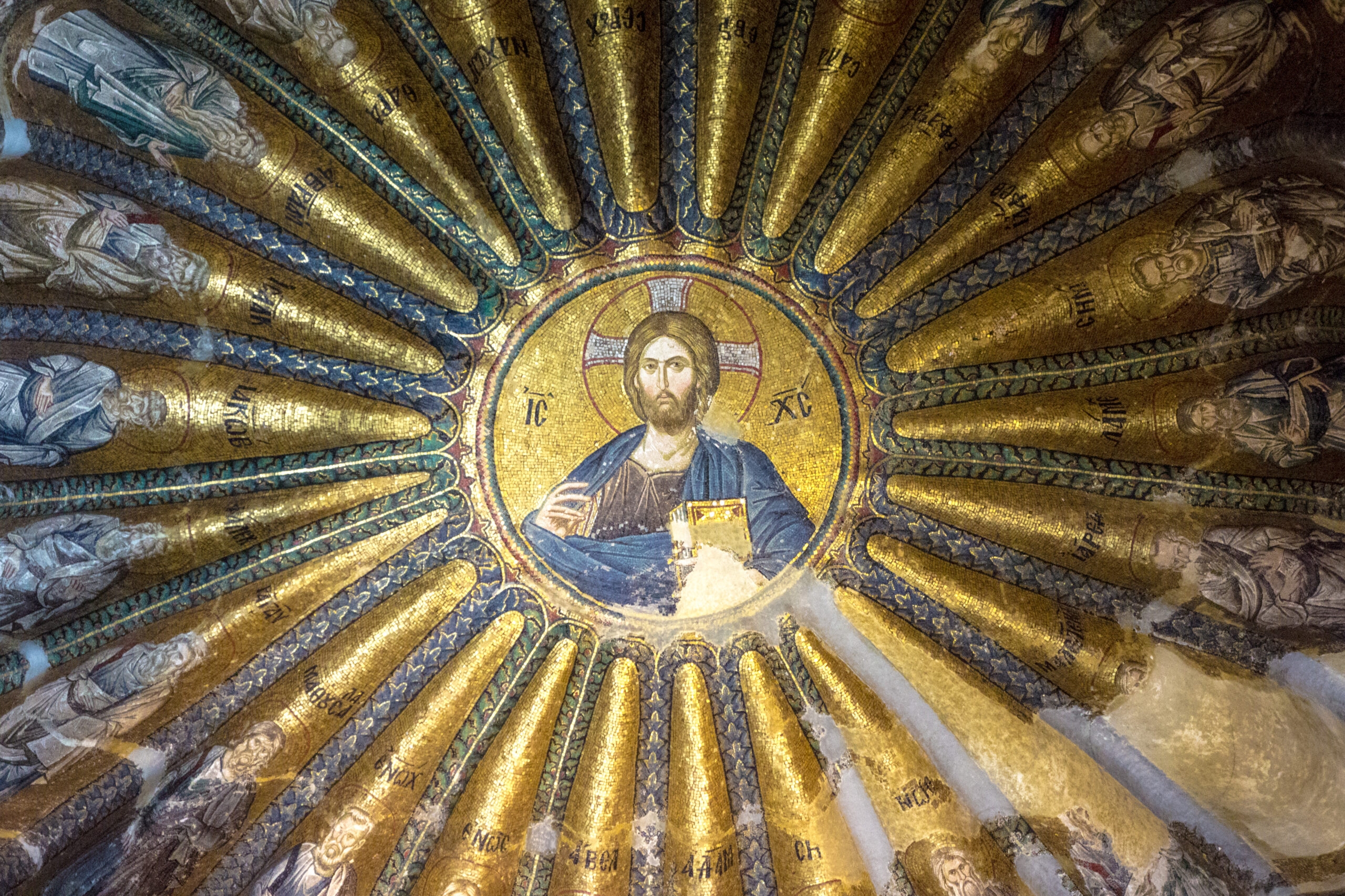

Part I: How Can Jewish People Believe in Jesus?
In his book, The Jewish 100: A Ranking of the Most Influential Jews of All Time, Michael Shapiro attempts to quantify the unquantifiable.[1] No doubt, Shapiro’s title is provocative enough to inspire Talmudic debate in yeshivas from Brooklyn to Jerusalem. He starts off strong with Moses in the top spot. Among the other top names are Albert Einstein, Maimonides, Rashi, and Sigmund Freud. Solid choices. But who is in second place, just under Moses? Jesus of Nazareth.
Jesus?! The founder of a different religion? The one the Gentiles worship as God? The one who has brought antisemitism and misery to Jewish people? How could he be the second most influential Jewish person of all time?
Note: The following discussion is intended for a Jewish audience, but if you are not part of the tribe, feel free to listen in.
What Does Jesus Have to Do with Me?
If we were to listen only to the majority voices within Judaism for the last 1,500 years, then it may be clear why we ought to disregard Jesus’s claims.
First off, Jewish people don’t believe in Jesus: only Christians do. Then there is the fact that Jesus didn’t end antisemitism around the world, but rather his followers perpetuated and expanded it. We could add his claims to be divine (a no-no in Judaism) and his teachings against the Torah. Simply put, Jesus did what the Messiah shouldn’t do, and omitted what the Messiah must do.
So go the common objections. But you aren’t reading this article to read what you already believe. You’re curious why so many people still believe, despite the common objections, Jesus is the Messiah of Israel and the nations. How can intelligent people believe in Jesus?
Let’s briefly handle these common objections before proceeding.
It’s a misunderstanding to claim only Gentile Christians believe in Jesus. Jesus’s earliest followers were Jewish. The only reason Gentiles started believing in Jesus was because of the success of his message among Jewish people in Judea. Scholars have traced ancient Jewish-Christian communities for centuries after Jesus.[2] The Middle Ages and modern era contain examples of Jewish believers in Jesus.[3] Hundreds of thousands of Jewish people came to believe in Jesus in the nineteenth and early twentieth centuries, but many were murdered in the Holocaust.[4] Today, Messianic Jewish communities are thriving throughout the world. So yes, Jewish people have believed and do believe in Jesus.
What about antisemitism? With great remorse, I must admit that those who claimed the name of Christ have too often been enemies of Jewish people.[5] How irrational for someone to say he loves Jesus the Jewish man but hates Jewish people! Much more could be said on this subject, as indeed I have written elsewhere.[6] However, I must insist that the New Testament does not promote antisemitism, but rather teaches that God loves the Jewish people. The false theology motivating Christian antisemitism—called Supersessionism or Replacement Theology[7]—is a foreign pollutant to Christianity that we can purge by accurately reading the New Testament as a pro-Jewish work written by Jewish people.[8] Neither Jesus nor the New Testament brought misery to Jewish people; these effects come from bad Christian theology and sinful coercive ethics now being corrected.
Admittedly, talk about the Trinity[9] and Incarnation[10] today sounds foreign and non-Jewish, but this strangeness is because the Jewish theological goalposts have been shifted.[11] Today’s Jewish scholars recognize this shift and are revising old sensibilities about Jesus’s divine claims. In the first century CE, his claims were not so foreign. Back then, Jewish people spoke about messianic figures and divine intermediaries in remarkably Trinitarian ways. There is even evidence of quasi-Trinitarian theology in the Talmud and the Jewish mystical tradition.[12] Many contemporary Jewish scholars have taken note, concluding that the idea of God coming to earth as a human and having a Holy Spirit manifestation is a Jewish idea.[13]
Next up is Christianity and the Torah. Christians sure love their bacon cheeseburgers. Bacon love means Jesus is not the Messiah, right? But hold on a second: you’re thinking about bacon-loving Gentile Christians, right? Judaism has never said that Gentiles need to keep the Torah, so this objection has a false premise. If you’re Jewish and want to keep Torah to the best of your ability, the New Testament says go for it. Messianic Jewish people today, like the Jewish authors of the New Testament, happily celebrate the festivals, worship on Shabbat, circumcise their sons, and much else besides.[14] And also: please don’t ignore how Jesus himself said, “Do not think that I came to abolish the Law or the Prophets; I did not come to abolish but to fulfill” (Matthew 5:17).
Finally, one last bit about what Jesus didn’t do. There are many prophecies he didn’t even attempt to fulfill: reversing the exile, reestablishing a Davidic kingdom, removing Israel’s enemies from the earth, stopping all wars, and so forth.[15] Does this fact make him a failed Messiah? Not at all: the New Testament acknowledges Jesus has unfinished business that he will complete when he returns (Acts 3:21; Rev 19). All you hope for, and more, is coming. Jesus will fulfill everything spoken of the Messiah in the Scriptures.[16]
Part II: Climbing Mountains, Teaching Torah, and Good Genes
We get our idea of a Messiah from the Hebrew Scriptures, so as I make my case for Jesus as the Messiah of Israel, let’s begin there.
Already, you may be protesting. He’s just going to be presenting his biased, Christianity-infused interpretation of Israel’s holy texts—texts that were written by my people! Okay, I see your point. How about this: I’ll only bring up passages that Jewish people saw as messianic before Jesus rolled onto the scene around 30 CE. Then we can cut out those Christians altogether.
Let’s go back to first-century Judea. You’re living under Roman domination, yearning for freedom. Expectations for the Messiah are building (we’ll get to why later!). Amid this unrest, you hear that your fellow Jewish people keep going into the desert, following strange characters. Someone named Theudas goes out to the desert, amassing followers by telling them he will part the Jordan river.[17] Several others persuade Jewish people that they will perform signs and wonders in the wilderness.[18] Even across the Mediterranean in Cyrene, some Jonathan convinced the Jewish multitude to go out into the desert, where he would perform signs and wonders.[19]
What was the common link among these strange events? It was God’s prophecy of the Messiah to Moses: “I will raise up a prophet from among their countrymen like you, and I will put My words in his mouth, and he shall speak to them all that I command him” (Deuteronomy 18:18).[20] In other words, God told the Jewish people to look for a Messiah who was like Moses himself.
When all these false messianic claimants came preaching, they convinced their audiences that they would do signs and wonders, parting rivers just like Moses in the desert. According to first-century Judaism, doing Moses-like miracles was a messianic requirement. These expectations continued into the rabbinic era, where the sages taught, “Like the first redeemer [Moses], so the last redeemer [Messiah].”[21] One tradition goes even further: “As the first one appeared among Israel and then disappeared from among them, so the last redeemer will appear among Israel and then disappear from among them.”[22] In other words, just as Moses had “two comings” to Israel (before and after his killing of the Egyptian, Exod 2:15), so the Messiah will have a first and a second coming.
But to be Messiah, one needed more than just charisma and miracle-working. Messianic claimants needed to show their heritage from King David, because the Messiah was prophesied to come from David’s descendants (2 Samuel 7). It is universally acknowledged that the Messiah must be “the Son of David.”[23] Such lineage could be officially and historically demonstrated in the first century, as genealogical records were stored in the Temple archives.[24]
These two initial messianic requirements—miracle-working like Moses and Davidic lineage—were widely recognized in the first century, and they filter out the vast majority of Jewish people from being the Messiah. And here’s my initial point: Jesus met both criteria.
The New Testament Gospel accounts, which are biographies of Jesus written by his Jewish followers, each claim that Jesus became popular in Judea because of his miracle-working and teaching. Jesus is famous for turning water into wine, multiplying loaves and fishes, restoring sight to the blind, walking on water, and teaching his incomparable Sermon on the Mount (Matt 5–7). Even the later rabbinic sages acknowledged that Jesus performed miracles and was a teacher.[25] Of course, Moses himself is renowned for his teaching and miracle-working, but the similarity between Moses and Jesus goes much further:
|
Moses |
Jesus |
|
| 1. | Performs miracles against Egypt for Egypt’s judgment and Israel’s salvation (Exod 7–12) | Performs miracles upon Israel for her healing of disease, brokenness, and sin (Matt 4:23–25) |
| 2. | Delivers salvation from Egypt to Israel on Passover (Exod 12) | Delivers salvation from sin to Israel on Passover (John 1:29; 1 Cor 5:7; Matt 26:2; Mark 14:1) |
| 3. | Provides manna and quail for the people in the desert (Exod 16) | Provides bread and fish for the people in the desert (Matt 14; Mark 6; Luke 9; John 6) |
| 4. | Receives the Torah on the mountain (Exod 19) | teaches Torah from a mountain (Matt 5:1; 24:3; 28:16) |
| 5. | Delivers a new covenant to Israel (Exod 19; 24) | Delivers a new covenant to Israel (Luke 22:20; Heb 12:24) |
| 6. | Those who reject Moses are punished (Num 16; Deut 28) | Those who reject Jesus are punished (Luke 19:41–45; Matt 23:37–38) |
| 7. | Invests Joshua and the seventy elders with authority (Exod 24; Num 11; 27) | Invests Peter and the seventy-two disciples with authority (Matt 16:18, 28:16–20; Luke 10:1) |
The same goes for Jesus being a son of David. The New Testament includes detailed genealogies for both Jesus’s mother and his adopted father (Matt 1; Luke 3), each of which goes back to King David. As first-century Jewish accounts written before the destruction of Jerusalem in 70 CE, the credentials for Jesus’s Davidic lineage are more detailed and credible than is possible today. If someone claimed to be the Messiah today, saying he had Davidic ancestry, there would be no way to verify such a claim historically. The official genealogical records were destroyed by the Romans in 70 CE.[27] In contrast, Jesus’s Davidic heritage was never in question during the first century, likely because accurate records confirming his lineage still existed in Jerusalem.
Already, it is no wonder why first-century Jewish people took notice of Jesus. He was a miracle-working rabbi with Davidic lineage who had a fondness for climbing mountains and teaching Israel the Torah. Could he be the Messiah?
Part III: The Suffering Servant Messiah Who Arrived Right on Schedule
Now let’s talk about a second set of messianic credentials Jesus meets. We’re still limiting ourselves to just those prophecies recognized as messianic by Jewish people in the first century.
Math, Messiah, and Mayhem in Jerusalem
According to Josephus, the first-century Jewish historian, in the 60s CE the Jewish populace was eagerly expecting the Messiah to come in their very own day because of a prophecy from Daniel in the Hebrew Scriptures (Daniel 9:24–27).[28] Daniel’s prophecy begins,
Seventy weeks have been decreed for your people and your holy city, to finish the transgression, to make an end of sin, to make atonement for iniquity, to bring in everlasting righteousness, to seal up vision and prophecy and to anoint the most holy place. (Daniel 9:24)
This prophecy states that “seventy weeks” would pass by, during which a series of magnificent events would be accomplished, including atonement for sin and the arrival of righteousness. Many Jewish interpreters understand these as “weeks of years,” referring to 490 years in total.[29] Once the timeclock starts ticking,[30] do the math: around 490 years later, everything written in verse 24 will be accomplished.[31]
Astonishingly, the following verses say how it will be accomplished: the Messiah’s arrival and Jerusalem’s destruction. Daniel referred to “Messiah (מָשִׁיחַ), the Prince” who would arrive on the scene before the end of the seventy weeks (Dan 9:25).[32] After his arrival, this anointed one—Messiah in Hebrew and Christ in Greek—would be “cut off.” Then another prince would come and “destroy the city and the sanctuary” (Dan 9:26).
Josephus referenced this passage in his historical account of the Roman war against Judea in the 60s and early 70s CE. He claimed Daniel 9 was the central motivator for the Zealots to garner support for their rebellion against Rome. Josephus summarized how Daniel prophesied the destruction of the Temple and Jerusalem, and then he wrote,
But now, what did most elevate [the Zealots] in undertaking this war [against Rome], was an ambiguous oracle that was also found in their sacred writings, how, about that time, one from their country should become governor of the habitable earth.[33]
Such a governor would be the Messiah, the anointed one in the passage. According to Josephus, the Zealots expected a worldwide Jewish king to come “about that time”—meaning, in the first century CE. It’s clear that the Jewish people had read Daniel 9 and done the math, saying the “seventy weeks” culminated in the first century, with the corresponding arrival of the Messiah.
Were the Jewish people right or wrong on this issue? Reflecting on the Zealots’ failure against Rome, Josephus stated after 70 CE that he agreed with their calculations about the seventy weeks. However, he criticized his fellow Jewish people for failing to identify Roman emperor Vespasian as the “anointed prince” prophesied in the passage.
No one has followed Josephus in naming Vespasian as the fulfillment of Daniel 9. The Roman emperor was not Jewish, was not a descendant of David, and did not accomplish any of the deeds listed in Daniel 9:24, such as atonement and establishing “everlasting righteousness.” Also, Vespasian wasn’t “cut off” before the destruction of Jerusalem (Dan 9:26).
Forgiveness and Shalom Through Messiah’s Suffering
Before we get ahead of ourselves, let’s bring up another important passage to consider here.
Tucked into the extensive writings of the Prophet Isaiah (eighth century BCE) is a famous chapter called Isaiah 53, or the Suffering Servant passage. If you’ve never read it before, you might as well put this article away, pick up a Hebrew Bible, and start reading Isaiah 52:7—Isaiah 53:12 right now. This passage has brought more Jewish people to believe in Jesus than any other. A pivotal excerpt reads,
Surely our griefs He Himself bore, and our sorrows He carried; yet we ourselves esteemed Him stricken, smitten of God, and afflicted. But He was pierced through for our transgressions, He was crushed for our iniquities; the chastening for our well-being fell upon Him, and by His scourging we are healed. All of us like sheep have gone astray, each of us has turned to his own way; but the Lord has caused the iniquity of us all to fall on Him. (Isaiah 53:4–6)
This seems to be talking about one unique, innocent individual who willingly lays down his life as a sacrifice for the forgiveness and shalom of others. Let’s examine this a bit further.
You’ve likely heard of the Dead Sea Scrolls, the magnificent treasure trove of Hebrew manuscripts discovered in 1947. The Dead Sea Scrolls community—likely the Essenes—originated centuries before Jesus, and their writings were untouched by Jesus’s followers. They hid their scrolls in caves before the Romans could get ahold of them in 70 CE. One surviving manuscript was the Great Isaiah Scroll, which preserved almost the entire book of Isaiah, including the passage about the Suffering Servant. They identified a major section beginning in Isaiah 52:7 by placing a distinctive symbol in the margin.[34] That verse reads:
How beautiful upon the mountains are the feet of him who brings good news, who publishes peace, who brings good news of happiness, who publishes salvation, who says to Zion, “Your God reigns.” (Isaiah 52:7)
The Hebrew word for “good news,” (mevaser, מְבַשֵּׂר) was translated by Greek-speaking Jewish people as euangelizo (εὐαγγελίζω), which is related to a key word in the New Testament (εὐαγγέλιον) often translated as “gospel” in English. Likewise, the Hebrew word for “salvation” in this passage is yeshuah (יְשׁוּעָה), which is the derivation of Jesus’s Hebrew name, Yeshua. Thus, we can paraphrase this verse: “A messenger announcing yeshuah will come to the Jewish people proclaiming the gospel of shalom and teaching in Jerusalem that the kingdom of God is happening now.”[35] Elsewhere, the Dead Sea community identified the messenger in this verse as the Messiah.[36]
The community resumed interpreting the Suffering Servant as the Messiah as we continue in the Great Isaiah Scroll. This is evident in Isaiah 52:14, where the Scroll differs from the much later Masoretic manuscripts by a single yud (י). The inclusion of the yud at the end of one of the words makes it say, “I have anointed” (mashachti, מָשַׁחְתִּי). Scholars Martin Hengel and Daniel Bailey translate the resulting verse:
Just as many were astonished at you, so have I anointed his appearance beyond that of any (other) man, and his form beyond that of the sons of humanity [lit., of the human].[37] (Isaiah 52:14, 1QIsaa)
Unfortunately, only a few other pre-Jesus allusions to Isaiah 53 are available to us today, and they are mostly unclear.[38] So, please permit me to cheat a bit on my rule about only considering pre-Jesus Jewish interpretations: let’s look at post-Jesus Jewish interpretations of the Suffering Servant.
Few Jewish people today realize how many rabbinic commentators agree that Isaiah 53’s Suffering Servant is the Messiah.[39] This interpretation is widespread across many Jewish communities and centuries.[40] The messianic interpretation appears in the Talmud (b. Sanhedrin 98b), Targum Jonathan, various midrashim, and multiple medieval commentators, including the illustrious Maimonides. The great sage wrote in his Epistle to Yemen,
Isaiah referring to the arrival of the Messiah implies that neither his father nor mother, nor his kith nor kin will be known, “For he will shoot up right forth as a sapling, and as a root out of the dry ground.” (Isaiah 53:2). . . . Isaiah refers to the submission of the kings to the Messiah in the verse, “Kings shall shut their mouth because of him.” (Isaiah 52:15).[41]
To sum this up, we have Jewish interpreters both before and after Jesus saying the Suffering Servant passage is a prophecy about the Messiah, and thus it contains details about what the Messiah would do. But what does the passage actually say? Here’s a summary:
The Messiah will be high and lifted up (Isa 52:13). He will cause Gentile kings to be speechless and believe what had not been revealed to Gentiles previously (52:15). As stated above by Maimonides, the Servant will have miraculous origins, growing up like a root out of dry ground (53:2). Isaiah’s people will mostly reject the Messiah, thinking that God wants the Servant dead (53:1–3). Yet the people are mistaken. God intends the Messiah to bear the sins of Israel, providing her with shalom and healing (53:5), righteousness and intercession (53:11–12), and the forgiveness of sins (53:6, 10–12). But Israel will not understand what is going on and will seek the Messiah’s death (53:1, 3–4). He will be led to his death after a false trial (Isa 53:8). Still, he won’t attempt to defend himself (53:7). He will be violently executed, even though he committed no sin (53:9). In response, the Lord God will consider him an asham (אָשָׁם), a guilt offering for the sins of Israel (53:10).[42] Despite the Messiah’s death, he will come to life and prosper the Lord’s will, transforming many sinners into righteous men and women (53:11). He will end up victorious, not dead, sharing the bounty of his riches with the many he has made righteous (53:12). The Messiah will be vindicated because he was willing to die in place of sinners (53:12).
If this is what Messiah does for sinners like you and me, then it’s no surprise why Isaiah and the Jewish New Testament authors called this the “good news” or gospel! The New Testament liberally quotes Isaiah 53 in reference to Jesus’s fulfillment of the passage:[43]
Table 2 – New Testament Quotations of Isaiah 53
|
Isaiah Passage |
New Testament Quotation |
Referent |
|
Isaiah 52:7 |
Romans 10:15 |
Those who spread the good news about Jesus |
|
Isaiah 52:13 |
John 3:14, John 8:28 |
Jesus as the man “lifted up” |
|
Isaiah 52:15 |
Romans 15:21 |
Messengers, like Paul, who spread the servant’s message to Gentiles |
|
Isaiah 53:1 |
Romans 10:16; John 12:38 |
The unbelief of Israel regarding the servant |
|
Isaiah 53:4 |
Matthew 8:17 |
Jesus, the miraculous healer, taking Israel’s diseases |
|
Isaiah 53:5 |
1 Peter 2:24 |
Jesus as the wounded one who heals others |
|
Isaiah 53:6 |
1 Peter 2:25 |
Humanity straying like sheep and brought back through Jesus |
|
Isaiah 53:7–8 |
Acts 8:32–33 |
Jesus as the lamb led to slaughter through injustice |
|
Isaiah 53:9 |
1 Peter 2:22 |
Jesus, who committed no sin |
|
Isaiah 53:12 |
Luke 22:37 |
Jesus, numbered with the transgressors |
Putting It Together
Now, let’s tie together the two strands of argument in this section: Daniel 9 and Isaiah 53. There is precedent to read both passages messianically according to Jewish people in the pre-Jesus era. The Daniel passage says the Messiah would come before the destruction of Jerusalem, an interpretation the Zealots and Josephus agreed with. Yet the passage said the seventy weeks would not be completed until atonement and everlasting righteousness would be brought to Israel.
In Isaiah 53 we see an expansion of the prophecy about atonement and righteousness. The Messiah himself would come and die, being cut off for the sins of the people, just as Daniel 9:25 says. Through the Messiah’s death, he will serve as a guilt offering (אָשָׁם) for the sins of Israel. But then he will rise from the dead, conquering death and providing healing, peace, intercession, and blessings to the many people he has made righteous (Isa 53:10–12).
In Jesus, we have an answer for both passages. He was executed for no crime of his own, claiming his death had the power to forgive sins (Matt 9:5–6), ultimately providing everlasting righteousness to those who believed in him (Rom 3:22; Phil 3:9). But he did not stay dead: he rose on the third day (more on this event in a bit). All this happened before the destruction of Jerusalem in the first century, meaning before Daniel’s seventy weeks had run out. Indeed, credible historical means indicate Daniel’s weeks of years prophesied the coming of the Messiah around 30 CE.[44]
Part IV: Timeclocks, Genes, Mitzvot, and 70 CE: Why No One Else Can Be Messiah
Typically, when religious Jewish authors explain the credentials for the Messiah, they summarize them as follows: Messiah must be from the line of David, a powerful warrior-general, conqueror of Israel’s enemies, rebuilder of the (Third) Temple, and restorer of exiled Jewish people to the Holy Land. It’s not hard to conceptualize such a person coming in the future, and as admitted earlier, Jesus did not fulfill all these criteria—but he will when he returns.[45]
The major problem with this typical list of criteria is that it only includes a subset of the prophecies about the Messiah, his identity, his actions, and the timing of his arrival. This subset makes it plausible that a new messianic claimant could arrive in the present or the future.
However, this openness to a new Messiah comes at the expense of ignoring many messianic prophecies, discarding previous Jewish opinions on the subject, and failing to consider what 70 CE has done to the discussion. It is hard to overstate how decisively the destruction of Jerusalem and the Temple in 70 CE looms over the question of Messiah. The destruction has been a dividing line in many areas of Jewish thought, practice, and history, and it is a dividing line for the messianic arrival as well.
Daniel 9 explicitly prophesied the destruction of the Temple and the coming of “an anointed one” beforehand. He connected these events to the arrival of righteousness and atonement, placing these happenings on a timeline bracketed by 490 years. In addition, Daniel prophesied the messianic kingdom would begin during the time of the Roman Empire (Dan 2:44).[46] First-century Jewish people did the math and believed it pointed to the arrival of Messiah in the first century, during the Roman reign. Followers of Jesus have concurred with similar calculations.
In response to these claims, many Jewish sages have resorted to barring all calculations of the Messiah’s arrival date in general and Daniel’s seventy weeks in particular.[47] One Talmudic sage has said that the previously ordained time of the Messiah’s arrival has been lost due to Israel’s sin (b. Sanhedrin 97a–b). Another sage, Rav, declared, “All the predestined dates [for redemption] have passed and the matter [now] depends only on repentance and good deeds.”[48] But these agnostic prohibitions against interpreting God’s word—even the nullification of Scripture’s accuracy—go too far. Instead of treating Daniel’s prophecy dismissively, a reasonable interpretation leads to Jesus. Messianic Jewish scholar Michael Brown writes,
It is only fair to ask, if one of the central redemptive events described in Daniel’s prophecy was “to atone for wickedness,” and if this event was to take place before the Temple’s destruction in 70 C.E., and if this was the whole focus of Yeshua’s ministry, why then seek a different explanation and overlook the most important atoning event in human history?[49]
Next, let’s discuss the impact of the Temple’s destruction on the genealogical requirements of the Messiah. The Hebrew Scriptures are adamant that the Messiah must come from the line of Judah (Gen 49:10) and the family of David (2 Sam 7). Throughout the time of the Hebrew Scriptures, from the time of David all the way to the destruction of the Second Temple, the Jewish people kept detailed and publicly accessible genealogical records. Those records were destroyed along with the Temple.[50] Thus, there is no humanly verifiable way to ascertain this most basic messianic requirement.
One could respond that God knows which Jewish people are descended from David today—which is true—and he could just reveal the future Messiah’s lineage in a miraculously irrefutable way. But if this is the case, we ought to ignore evidence, reason, and study at this point and just wait for divine fiat. Does God really want us to turn off our brains? Does thinking about messianic credentials matter or not? It is much more reasonable to believe the Messiah would have come during a time when Israel had access to judge the Davidic heritage of a messianic claimant.
Finally, no messianic claimant today could live up to the standard laid out for him in the Torah. The Messiah is associated with righteousness (tzedakah, צְדָקָה) in the Scriptures,[51] and righteousness is defined by how thoroughly and faithfully one observes the mitzvot of the Torah.[52] The destruction of 70 CE complicates a future Messiah’s ability to be righteous. Many mitzvot require a functioning Temple and priesthood for cleansing and atonement. Nothing in the Torah hints at acceptable substitutes for the Temple and priesthood.[53] Since the common Jewish opinion is that the Messiah will be a mere man (and not divine), it follows that the future Messiah will eventually sin (1 Kgs 8:46). When he sins, there is a Temple-based procedure laid out in the Torah for his atonement and forgiveness (Lev 4:22–26), but he will not be able to follow the procedure without a Temple and priesthood. His sin would thus remain unatoned for and unforgiven, compromising his claims to righteousness and ultimately his ability to be the righteous Messiah.
Such a messianic candidate would be caught in a catch-22: the claimant needs an already-established Temple and priesthood to provide him with the ritual cleansing and the ability to perform the commandments so he can be righteous, but he needs to be cleansed and righteous in order to be the Messiah and reestablish the Temple.
Part V: God With Us—A Jewish Idea, or Not So Much?
I know—the idea of a Jewish person believing in Jesus’s divinity often makes as much sense as buying kosher ham on Shabbat to celebrate Christmas in your synagogue. It’s just so . . . goyishe, so foreign, so Christian. You may be thinking, how could anyone possibly argue otherwise? I get it. This one is a big deal.[55]
Now, I can’t deny that Jesus made some grandiose claims for himself, such as when he said:
“All authority has been given to Me in heaven and on earth.” (Matt 28:18)
“Truly, truly, I say to you, before Abraham was born, I am.” (John 8:58)[56]
We also read,
[Jesus was] “making himself equal with God.” (John 5:18)
“For in [Jesus] all the fullness of Deity dwells in bodily form.” (Colossians 2:9)
Preposterous, you might say. It has been deeply ingrained in the modern Jewish mind that God cannot become human: it’s literally impossible for him to do it.[57] Because it’s impossible, anyone who says Jesus is God in the flesh is fooling themselves and actually advocating idolatry.
Have you ever sat down and put this argument under the microscope? Can we really confine God regarding what he can and cannot do? While he may be transcendent and outside of the universe and time, does this mean he cannot simultaneously enter into the universe?
If you were to read the Hebrew Scriptures without this assumption in play, you might come to very different conclusions. There is evidence throughout the Torah, Prophets, and Writings that God not only can come to earth in physical form, but that he has done it in Israel’s history, and that he prophesied he would do it in the future through the Messiah.
Take spatial language, for example. Many passages in the Scriptures say God is “here” or “there” or located in some physical place or another. The Exodus narrative consistently portrays God as if he is located at the top of the mountain. For example:
Exodus 19:2–3: “There Israel camped in front of the mountain. Moses went up to God, and the Lord called to him from the mountain . . . .”
Exodus 19:20: “The Lord came down on Mount Sinai, to the top of the mountain; and the Lord called Moses to the top of the mountain, and Moses went up.”
Exodus 24:1: “Then he said to Moses, ‘Come up to the Lord, you and Aaron, Nadab, and Abihu, and seventy of the elders of Israel, and you shall worship at a distance.’”
Likewise, when God spoke to Moses and told him he could see God’s “back,” he told Moses to go to “a place by Me” (מָקֹום אִתִּי, makom iti, Exod 33:21). Ezekiel spoke of the place (מָקֹום, makom) of the glory of the Lord (Ezek 3:12). What does this spatial language mean if God cannot be located in any physical place whatsoever?
Then there is the striking passage where God describes how he is sending an angel (messenger) who will have God’s name within him:
“Behold, I am going to send an angel before you to guard you along the way and to bring you into the place which I have prepared. Be on your guard before him and obey his voice; do not be rebellious toward him, for he will not pardon your transgression, since My name is in him [כִּי שְׁמִי בְּקִרְבֹּו, ki shmi bekirbo].” (Exod 23:20–21)
This angel or messenger has the name of the Lord “in him.” How can this be? According to Jewish mysticism scholar Moshe Idel, this is the most important passage leading Jewish mystics to speculate about God having a son who was united with him.[58] Why? Because God gives his holy name (יהוה) and glory to no other (Isa 42:8) and because only God has the ability to pardon transgression (but choose not to). If the angel bears God’s name, then he is God in angelic form: he is simultaneously and mysteriously distinguished from God (because God is not innately physical) and united with God (because God inhabited the physical angel).
These examples illustrate how the relationship between God and the physical universe may overlap more than is commonly assumed. It would seem that God can show up in physical spaces and in physical forms whenever he decides to. And in some instances, he even came and spoke to Israelites in the form of a man.
In Genesis 18, we read “the Lord (יהוה) appeared to [Abraham].” The word for “appear” is the passive form of the verb “to see” (yera, יֵּרָא). Thus, flipping the passive verb to active, we read Abraham saw the Lord. The passage continues by narrating the arrival of three men to Abraham’s camp. His first reaction was to address one of the three men, saying, “O Lord (אֲדֹנָי), if I have found favor in your sight, do not pass by your servant” (Gen 18:3). Now, there are earthly lords and the one-and-only heavenly Lord in the Hebrew Scripture, and the latter is named Adonai (אֲדֹנָי). This is what Abraham called one of the three men: a holy title reserved for God alone.[59]
In Genesis 32, Abraham’s grandson Jacob had a similar experience. It’s a famous scene: Jacob wrestles with a “man” who changes his name to Israel. Afterward, Jacob says, “I have seen God face to face” (Gen 32:24–30). Lest we think Jacob was mistaken, Scripture tells us in three other places that the “man” who wrestled with him was none other than Hashem (the Lord) in humanlike and angelic-like form (Gen 35:9–10; 2 Kings 17:34; Hosea 12:3–5).
Thus, God not only can show up in physical places, but he has shown up in the physical form of a man—even to Abraham and Jacob.
Since we now see that God can come to Israel in human form, we’ll be able to make sense of two other themes found in the Hebrew Scriptures: 1) God will one day come and walk with his people, and 2) Messiah will be divine.
In Leviticus 26:12, Moses recorded God as prophesying, “I will walk among you and will be your God, and you shall be my people.” What does it mean for God to walk among Israel? Writing in the eleventh century, the revered Jewish exegete Rashi commented: “I will, as it were, walk with you in the Garden of Eden as though I were one of yourselves and you will not be frightened of Me.”[60] Rashi alluded here to Adam and Eve hearing God “walking” in Eden (Gen 3:8). This was a relational intimacy that had since been lost but would be regained in the world to come, the restored Eden. Rashi expected a future day when Israel would experience God “as though I [God] were one of yourselves”—that is, human. In fact, Rashi’s interpretation aligned with an earlier rabbinic tradition (circa third century CE), which stated, “Thus is the Holy One Blessed be He destined to walk with the righteous in the Garden of Eden in time to come. They will see Him and recoil before Him, (and He will say to them) ‘I am like you.’”[61] This is the first prophetic theme: God will walk with his people.
The second prophetic theme is that Messiah will be God in the flesh. Evidence in favor of this idea is found in various places in the Hebrew Scriptures. First, consider Isaiah 9:5–6:[62]
For a child will be born to us, a son will be given to us; and the government will rest on His shoulders; and His name will be called Wonderful Counselor, Mighty God, Eternal Father, Prince of Peace [פֶּלֶא יֹועֵץ אֵל גִּבֹּור אֲבִיעַד שַׂר־שָׁלֹום]. There will be no end to the increase of His government or of peace, on the throne of David and over his kingdom, to establish it and to uphold it with justice and righteousness from then on and forevermore. The zeal of the Lord of hosts will accomplish this. (Isaiah 9:6–7 [5–6])
Given how this verse speaks of a Davidic king who will reign forever, it is no wonder why this passage has been interpreted concerning Messiah by Targum Isaiah and Maimonides.[63] But look at the name given to this son of David: Mighty God? Everlasting Father? How can a mere human being have a name like that? And if the king is really described by his name . . . well . . . (I’ll let you finish the sentence).
Rabbinic commentaries and translations of this verse are a balagan (a chaotic mess). Rabbinic commentators have disagreed among themselves whether the names should be applied to the king.[64] Likewise, Jewish translations of the verse into English differ in their handling of the passage.[65] The 1917 JPS translation of the verse chose to avoid the issue by not translating the name of the child at all.[66]
Why such difficulty? Theological preconceptions are complicating matters. If we follow the grammar of the Hebrew, the text unambiguously points to the name of the child himself. Messianic Jewish scholar Michael Brown, who earned a PhD in Semitic languages, comments on the common Jewish translations: “None of these translations does justice to the clear meaning of the original text, and one could easily argue that once the clear meaning is avoided, the verse becomes difficult to translate.”[67]
Once one allows for the theological idea that the Messiah could be God in the flesh, the grammatical and interpretational problem vanishes.[68] All the names apply to the child; no extra verbs or creative translations are needed. The child will be the Mighty God in human likeness.
Many other passages hint at the Messiah being divine or God one day dwelling among Israel in physical form.[69] Thus, when we consider Jesus’s claims to be God in the flesh, we shouldn’t see this as some odd claim coming out of nowhere. Instead, it was the culmination of Israel’s hopes and prophetic dreams.
Jewish people in the first century were hot on the tail of prophecies of a divine Messiah. Talmud scholar Daniel Boyarin has written, “Jews came to believe that Jesus was God, because they already believed that the Messiah would be a divine redeemer incarnated in a human being; they just argued about who that human being was.”[70] Likewise, Rabbi Phillip Sigal wrote, “The originators of Christianity were Jews, and they found their notion of a divine Messiah in their own heritage.”[71] Jewish scholar Esther Hamori concurs: “The Christian concept of incarnation has its roots in Israelite thought.”[72]
Part VI: On the Meshugaas of a Dead Man Alive Again
But why, you may be asking, should we accept some grandiose divine claims from Jesus? Any odd person can claim they’re God—and if they do, it’s proof of mental problems.
Agreed—in all cases but one. You should probably ignore anyone who says they’re God.
But what if someone says they’re God’s Son, claims to have powers and attributes that only God has, does a bunch of miracles, says he’s fulfilling prophecy, starts telling people that he will soon be killed, but that he will rise from the dead on the third day?
Even then, despite the signs and wonders, your skepticism might remain justified. Moses warned Israel against miracle workers who would entice Israel to idolatry (Deut 13). Miracle-working is not sufficient to prove authority from God.[73] Maybe this is the guy Moses warned about.
But what if this guy actually is killed, fulfilling his own predictions, and he actually does rise from the dead? He was dead—meaning he couldn’t work “miracles” on his own account—and then he was brought to life again. Well, in this case, perhaps your mental calculations should be readjusted. Why? Because only God raises the dead.
Part of God’s unique credentials, as given in the Torah, is that he alone has the power to give life (Deut 32:39). The Amidah declares: “Who is like you, Master of mighty deeds? . . . Blessed are You, O Lord, Who brings life to the dead.”[74] The Talmud Yerushalmi also reports the prophet Elisha as saying, “There is none who raises the dead except for the Holy One, blessed be he, as it is written in Scripture concerning him, ‘The Lord kills and brings to life; he brings down to Sheol and raises up’” (1 Sam 2:6).[75] These teachings about resurrection make sense: life is the gift of God, not able to be created by any other thing. Thus, life after death is only possible if God grants it by his own power.
So, what if God grants new life to a man who claimed he was the Son of God, the king of Israel, and the savior of the world? If God were to do so, he would vindicate those grandiose claims, providing a divine stamp of approval.
This sounds nice and all, you may be thinking, but too hypothetical and speculative. Is there actually any evidence that Jesus rose from the dead? I’m glad you asked.
The New Testament says the quickest way to disprove Jesus’s Messiahship is to prove he never rose from the dead (1 Cor 15:14–19). If he stayed dead, then he was a false Messiah, so says the New Testament. But if he rose from the dead, then he was who he claimed to be. Now, if a bodily resurrection occurred, it would have happened in time, place, and history. Thus, just like other fantastical claims about events in history, the resurrection of Jesus is open for historical investigation and disconfirmation.
We’re not talking about mere religion here but about history.
When historians wade through source material to reconstruct historical events, sometimes there are biased or conflicting reports, holes in the data, unanswered questions, or confusion about causes and effects. Because not everything is black-and-white in the historical record, historians often must provide hypotheses for how to account for the historical data. As with science, historical evidence sometimes gives rise to multiple explanatory hypotheses.[76] In our case, we have two. Hypothesis 1: Jesus did not rise from the dead. Hypothesis 2: Jesus rose from the dead. How are we to determine which one is correct?
Historian C. Behan McCullagh lists multiple factors historians consider when judging hypotheses about historical events. The best hypotheses have greater explanatory scope, explanatory power, more plausibility, less made-up suppositions, and fewer disconfirmations from other accepted knowledge compared to rival hypotheses.[77] In other words, historians go with theories accounting for the most evidence in the most elegant way.
What historical evidence must be accounted for concerning Jesus’s resurrection? No one in history has considered the historical data more than Gary Habermas, who earned his PhD on the subject in 1976 and then spent the next five decades focused on the same.[78] In 2024, Habermas released a thousand-page initial volume of a four-volume series, a culmination of his life’s work.[79]
Habermas has developed what he calls “The Minimal Facts Method” for investigating the resurrection of Jesus.[80] This method has involved a meticulous survey of roughly 4,500 scholars’ publications on the resurrection, sorting through their opinions on the events relating to Jesus in the first century. Habermas’s survey of credentialed scholars includes believers, nonbelievers, Christians, Jewish people, conservatives, liberals, atheists, postmodernists, and everyone in between.[81] After all this research, Habermas has determined the vast majority of credentialed scholars accept the following historical claims as facts due to the strong evidence in their favor:[82]
Fact 1: Jesus was a real historical person and was crucified by Roman authorities.
Fact 2: Jesus had disciples who claimed to have experiences of him resurrected from the dead.
Fact 3: The earliest (i.e. 30s CE) preaching message of Jesus’s Jewish followers was, “God raised Jesus from the dead.”
Fact 4: The transformation of Jesus’s disciples from cowardice to boldness after their claimed resurrection experiences with Jesus.
Fact 5: The transformation of James, Jesus’s brother, from a non-believer to a believer in Jesus after experiencing what he believed was an appearance of the risen Jesus.
Fact 6: The transformation of Paul from a non-believer to a believer in Jesus after experiencing what he believed was an appearance of the risen Jesus.
Beyond these “minimal” six facts, Habermas has identified another six still accepted by the vast majority of credentialed scholars, just at a lower percentage. This second set of six includes Jesus’s burial in a tomb, the tomb being discovered as empty, the disciples being despondent after Jesus’s death, early resurrection preaching taking place in Jerusalem, early Jewish-Christian gatherings commemorating the day of Jesus’s resurrection (Sunday), and the centrality of the resurrection in early Jewish-Christian preaching.[83]
These are the historical facts which the best hypothesis must explain better than any of its rivals. Let’s take a step back and consider what we are about to do. We’re still not talking about religion right now. Instead, we have our historians’ caps on, and we are sifting through the evidence at our disposal, trying to piece together the best explanation for the facts of the case. Come, my dear Watson, let’s see what we find.
It’s likely apparent that an elegant explanation accounting for all twelve of the facts is the following: Jesus of Nazareth rose from the dead and showed himself to his disciples (and others) after his resurrection. But what about the hypothesis that Jesus didn’t rise from the dead? Can this explain the facts better?
There are many variations of the “Jesus didn’t rise” hypothesis. A popular one is the conspiracy theory: after Jesus died, his disciples conspired to tell the world that they saw Jesus alive when they really hadn’t. Another one is similar but absolves the disciples of intentional deception: the disciples were so distraught that they tragically convinced themselves they saw Jesus, perhaps through hallucinations or mistaken person sightings.
When considering the six “minimal” facts, these theories account for a few of them. They accept and account for Jesus’s death (Fact 1), why the disciples claimed to see Jesus alive (Fact 2), and why they started preaching about his resurrection (Fact 3). But then we start running into problems. If the disciples hatched a deceptive conspiracy, why would this suddenly give them the boldness they previously lacked (Fact 4)? Isn’t it likely at least some of them would have recanted under pressure from Rome and Jewish authorities? But we have no reports of such recanting. Instead, we have many reports of Jesus’s disciples’ willingness to suffer and die for their eyewitness testimony of seeing the risen Jesus.[84] Additionally, Facts 5 and 6 do not fit either of these theories: James and Paul were outside the circle of Jesus’s followers at his death, thus outside any possible conspiracy or mistaken appearance to the disciples. Yet somehow, James and Paul came to believe they had witnessed Jesus alive after his death. The theories fall short of the other facts as well, such as the hallucination hypothesis not accounting for why the tomb was found empty.
Thus, the conspiracy theory and the mistaken identity theory are inadequate explanations for all the minimal facts.
Other “Jesus didn’t rise” theories include the “swoon theory,” which says Jesus didn’t actually die during crucifixion; the person-swap hypothesis promoted by the Qur’an (Surah 4:157–158), which states some other person was crucified in Jesus’s place (with Jesus taken up to heaven); and the agnostic approach, which states that it’s impossible to know what happened (except that Jesus didn’t rise from the dead).
None of these theories do justice to the six minimal facts or the expanded list of twelve.[85] They only explain a few of them poorly and implausibly, resulting in a historical void regarding the remainder.
Part VII: Jesus the Messiah of Israel and the Nations
We began this article by mentioning Jesus as one of the most influential Jewish people the world has ever seen. This, too, is another credential to add to his list. The Hebrew Scriptures repeatedly prophesied about the Messiah’s influence over the nations of the world—and not just through conquest.
It was prophesied:
Each of these prophecies has been accomplished through the influence of Jesus of Nazareth, who commissioned his followers to take his message of forgiveness, atonement, and salvation to the ends of the earth (Matt 28:19–20). Along with his message came the repentance of the Gentiles from their ways of paganism and polytheism, instead choosing to follow the God of Israel alone. No mission has been as successful as his. Paul wrote:
For I say that Messiah has become a servant to the circumcision on behalf of the truth of God to confirm the promises given to the fathers, and for the Gentiles to glorify God for His mercy; as it is written, “Therefore I will give praise to You among the Gentiles, and I will sing to Your name.” (Romans 15:8–9)[87]
But let’s not confine his successes to the Gentiles only. Yes, Jesus’s achievements with the Gentiles add to his credentials, but so too does his success among the Jewish people.[88] As we discussed previously, Jewish people have believed in Jesus, and they still do today. Messianic Jewish people may be found all over the world, and they are eager to tell their stories (www.ifoundshalom.com). Jewish believers in Jesus have included rabbis, musicians, scientists, and even a British Prime Minister. No matter where you’re coming from, you can find your place, and your home, with your Messiah. There are multiple Messianic Jewish organizations available to help you process the ramifications of Jesus being the Jewish Messiah.[89] Additionally, you may want to look up a Messianic Jewish congregation to visit on Shabbat in your area.[90]
In conclusion, we have good reason to believe that Jesus is the prophet like Moses, the Son of David, the cut-off Anointed One, the messenger who brings good news about the kingdom of God, the Suffering Servant, the atonement for Israel and the nations, God with us, the unconquerable and King of Israel who was raised from the dead and is coming back to finish his job. Perhaps he deserves another look.
You are loved by the God of Israel, and he powerfully shows his love for you through Jesus. You have sin; Jesus offers forgiveness. He says, “I am the way, and the truth, and the life; no one comes to the Father but through Me” (John 14:6).
Bibliography
Bockmuehl, Markus. “The Son of David and the Gospel.” In Introduction to Messianic Judaism: Its Ecclesial Context and Biblical Foundations, edited by David Rudolph and Joel Willitts, 264–72. Grand Rapids, MI: Zondervan, 2013.
Boyarin, Daniel. “Enoch, Ezra, and the Jewishness of ‘High Christology.’” In Fourth Ezra and Second Baruch, edited by Matthias Henze and Gabriele Boccaccini, 337–61. Leiden, The Netherlands: Brill, 2013.
———. The Jewish Gospels: The Story of the Jewish Christ. New York, NY: The New Press, 2012.
Braude, William G., and Israel J. Kapstein. Pĕsiḳta Dĕ-Rab Kahăna: R. Kahana’s Compilation of Discourses for Sabbaths and Festal Days. 2nd ed. Philadephia, PA: Jewish Publication Society, 2002.
Brown, Michael L. Answering Jewish Objections to Jesus. 4 vols. Grand Rapids, MI: Baker Books, 2000–2007.
———. Answering Jewish Objections to Jesus: Traditional Jewish Objections. Vol. 5. San Francisco, CA: Purple Pomegranate Productions, 2009.
———. Our Hands Are Stained with Blood: The Tragic Story of the Church and the Jewish People. Revised and Expanded edition. Shippensburg, PA: Destiny Image, 2019.
Craig, William Lane. Reasonable Faith: Christian Truth and Apologetics. 3rd ed. Wheaton, IL: Crossway Books, 2008.
———. The Son Rises: The Historical Evidence for the Resurrection of Jesus. Eugene, OR: Wipf and Stock Publishers, 2000.
Crawford, Brian J. “Pathways for Addressing Jewish Theological and Philosophical Objections to the Incarnation.” ProQuest Dissertations and Theses. D.Min., Biola University, 2021. http://www.proquest.com/pqdtglobal/docview/2610388914/.
Davis, Menachem, ed. Siddur for Weekdays with an Interlinear Translation. Schottenstein Edition. Brooklyn, NY: Mesorah Publications Ltd., 2002.
Driver, S. R., and Adolf Neubauer, trans. The Fifty-Third Chapter of Isaiah According to the Jewish Interpreters. 2 vols. Oxford, UK: James Parker and Co., 1877.
Evans, Craig A. “Isaiah 53 in the Letters of Peter, Paul, Hebrews, and John.” In The Gospel According to Isaiah 53: Encountering the Suffering Servant in Jewish and Christian Theology, edited by Darrell L. Bock and Mitch Glaser, 145–70. Grand Rapids, MI: Kregel Academic, 2012.
Feinberg, John S. No One Like Him: The Doctrine of God. Foundations of Evangelical Theology. Wheaton, IL: Crossway Books, 2001.
Fishbane, Michael A. Haftarot. The JPS Bible Commentary. Philadelphia, PA: The Jewish Publication Society, 2002.
Flavius Josephus. The Works of Josephus: Complete and Unabridged. Translated by William Whiston. Peabody, MA: Hendrickson, 1987.
Freedman, H., and Isadore Epstein, eds. The Soncino Midrash Rabbah. Judaic Classics DVD-ROM. 10 vols. Brooklyn, NY: Judaica Press, 1983.
Fruchtenbaum, Arnold G. What We Know About God: Theology Proper. Edited by Christiane K. Jurik. Second Edition. Come and See 2. San Antonio, TX: Ariel Ministries, 2019.
Glaser, Mitch. “Heroes of the Holocaust.” San Diego, CA, 2012. https://www.academia.edu/37858845/Heroes_of_the_Holocaust.
Glaser, Mitchell Leslie. “A Survey of Missions to the Jews in Continental Europe, 1900–1950.” PhD, Fuller Theological Seminary, 1999.
Gottlieb, Mark. “A Jewish Theology of Resurrection.” First Things, November 1, 2023. https://www.firstthings.com/article/2023/11/a-jewish-theology-of-resurrection.
Habermas, Gary. On the Resurrection: Evidences. Vol. 1. 4 vols. On the Resurrection Series. Nashville, TN: B&H Publishing Group, 2024.
Habermas, Gary R. Risen Indeed: A Historical Investigation into the Resurrection of Jesus. Bellingham, WA: Lexham Academic, 2021.
———. The Resurrection: Heart of New Testament Doctrine. Vol. 1. Joplin, MO: College Press Publishing Company, 2000.
———. The Resurrection: Heart of the Christian Life. Vol. 2. Joplin, MO: College Press Publishing Company, 2000.
———. “The Resurrection of Jesus: A Rational Inquiry.” PhD, Michigan State University, 1976.
Habermas, Gary R., and Michael Licona. The Case for the Resurrection of Jesus. Grand Rapids, MI: Kregel Publications, 2004.
Habermas, Gary, and Benjamin C. F. Shaw. “Jewish Scholars on Jesus’ Resurrection.” Global Journal of Classic Theology, no. 16.1 (2019).
Hamori, Esther J. “Divine Embodiment in the Hebrew Bible And Some Implications For Jewish and Christian Incarnational Theologies.” In Bodies, Embodiment, and Theology of the Hebrew Bible, edited by S. Tamar Kamionkowski, 161–83. New York, NY: T&T Clark, 2010.
Hengel, Martin, and Daniel P. Bailey. “The Effective History of Isaiah 53 in the Pre-Christian Period.” In The Suffering Servant: Isaiah 53 in Jewish and Christian Sources, edited by Bernd Janowski and Peter Stuhlmacher. Grand Rapids, MI: Eerdmans, 2004.
Idel, Moshe. Ben: Sonship and Jewish Mysticism. New York, NY: Continuum, 2008.
Kuhn, Thomas S. The Structure of Scientific Revolutions. 50th Anniversary Edition. Chicago, IL: University of Chicago Press, 2012.
Lapide, Pinchas. The Resurrection of Jesus: A Jewish Perspective. Translated by Wilhelm C. Linss. Eugene, OR: Wipf and Stock, 2002.
Levine, Amy-Jill, and Marc Zvi Brettler, eds. The Jewish Annotated New Testament. Second ed. Oxford, UK: Oxford University Press, 2017.
Licona, Michael R. The Resurrection of Jesus: A New Historiographical Approach. Downers Grove, IL: IVP Academic, 2010.
Magid, Shaul. Hasidism Incarnate: Hasidism, Christianity, and the Construction of Modern Judaism. Stanford, CA: Stanford University Press, 2014.
Maimonides, Moses. Letter to Yemen. Edited by Abraham S. Halkin. Translated by Boaz Cohen. New York, NY: American Academy for Jewish Research, 1952. https://en.wikisource.org/wiki/Epistle_to_Yemen.
McCullagh, C. Behan. Justifying Historical Descriptions. Cambridge, UK: Cambridge University Press, 1984.
McDowell, Sean. The Fate of the Apostles: Examining the Martyrdom Accounts of the Closest Followers of Jesus. New York, NY: Routledge, Taylor & Francis, 2016.
McKnight, Scot. “Jesus and Prophetic Actions.” Edited by Craig A. Evans. Bulletin for Biblical Research 10 (2000): 197–232.
Mishkin, David. Jewish Scholarship on the Resurrection of Jesus. Eugene, OR: Wipf and Stock, 2017.
Neusner, Jacob. The Early Sasanian Period. Edited by Jacob Neusner. Vol. II. A History of the Jews in Babylonia. Eugene, OR: Wipf & Stock, 2009.
———. The Jerusalem Talmud: A Translation and Commentary. Peabody, MA: Hendrickson, 2008.
New American Standard Bible: 1995 Update. La Habra, CA: The Lockman Foundation, 1995.
Porter, Stanley E., and Alan E. Kurschner, eds. The Future Restoration of Israel: A Response to Supersessionism. McMaster Divinity College Biblical Studies Series. Eugene, OR: Pickwick Publications, 2023.
Rashi. Pentateuch with Targum Onkelos, Haphtaroth and Prayers for Sabbath and Rashi’s Commentary. Translated by M. Rosenbaum and A.M. Silbermann. London, UK: Shapiro, Vallentine & Co., 1929–1934. https://www.sefaria.org/Rashi_on_Leviticus.
Reviv, Hanoch, Alexander Bein, Abraham J. Peck, Daniel J. Cohen, and Paul Awraham Alsberg. “Archives.” In Encyclopaedia Judaica, edited by Fred Skolnik and Michael Berenbaum, 2:402–18. Detroit, MI: Macmillan Reference and Keter, 2007.
Rubin, Barry, ed. The Complete Jewish Study Bible: Notes. Peabody, MA: Hendrickson Bibles; Messianic Jewish Publishers & Resources, 2016.
Rudolph, David, and Joel Willitts, eds. Introduction to Messianic Judaism: Its Ecclesial Context and Biblical Foundations. Grand Rapids, MI: Zondervan, 2013.
Rydelnik, Michael, and Edwin Blum, eds. The Moody Handbook of Messianic Prophecy: Studies and Expositions of the Messiah in the Old Testament. Chicago, IL: Moody Publishers, 2019.
Saadia Gaon. The Book of Beliefs and Opinions. Translated by Samuel Rosenblatt. New Haven, CT: Yale University Press, 1989.
Scherman, Nosson, Meir Zlotowitz, Yitzchok Stavsky, Dovid Oratz, Yitzchok Basser, and Yitzchok Schechter, eds. ישעיה – Isaiah. ArtScroll series. Brooklyn, NY: Mesorah Publications, 2013.
Schonfield, Hugh. The History of Jewish Christianity: From the First to the Twentieth Century. London, UK: Duckworth, 1936.
Segal, Alan F. Two Powers in Heaven: Early Rabbinic Reports about Christianity and Gnosticism. Reprint edition. Waco, TX: Baylor University Press, 2012.
Shapiro, Marc B. The Limits of Orthodox Theology: Maimonides’ Thirteen Principles Reappraised. Portland, OR: Littman Library of Jewish Civilization, 2004.
Shapiro, Michael. The Jewish 100: A Ranking of the Most Influential Jews of All Time. New York, NY: Paumanok Books, 2012.
Sigal, Phillip. “Further Reflections on the ‘Begotten’ Messiah.” Hebrew Annual Review 7 (1983): 221–33.
Silverstein, Shraga, trans. Sifra. Sefaria.org, 2014. https://www.sefaria.org/Sifra?tab=contents.
Skarsaune, Oskar, and Reidar Hvalvik, eds. Jewish Believers in Jesus: The Early Centuries. Peabody, MA: Hendrickson, 2007.
Sommer, Benjamin D. The Bodies of God and the World of Ancient Israel. Cambridge, UK: Cambridge University Press, 2009.
Soulen, R. Kendall. The God of Israel and Christian Theology. Minneapolis, MN: Fortress Press, 1996.
Stern, David H. Messianic Judaism: A Modern Movement with an Ancient Past. Clarksville, MD: Messianic Jewish Publishers, 2007.
Tanakh: The Holy Scriptures. Philadelphia, PA: Jewish Publication Society, 1985.
Tanakh: The Holy Scriptures According to the Masoretic Text. Philadelphia, PA: Jewish Publication Society, 1917.
Thompson, A. E. A Century of Jewish Missions. Chicago, IL: Fleming H. Revell, 1902. https://archive.org/details/acenturyjewishm00thomgoog.
Vermes, Geza. The Dead Sea Scrolls in English. Revised and Extended 4th ed. Sheffield, UK: Sheffield Academic Press, 1995.
Vlach, Michael J. Has the Church Replaced Israel?: A Theological Evaluation. Nashville, TN: B&H Academic, 2010.
Walvoord, John F. Daniel: The Key To Prophetic Revelation. JFW Publishing Trust, 2008.
Wellum, Stephen J. God the Son Incarnate: The Doctrine of Christ. Edited by John S. Feinberg. Wheaton, IL: Crossway, 2016.
Wilkins, Michael J. “Isaiah 53 and the Message of Salvation in the Gospels.” In The Gospel according to Isaiah 53: Encountering the Suffering Servant in Jewish and Christian Theology, edited by Darrell L. Bock and Mitch Glaser, 109–32. Grand Rapids, MI: Kregel Academic, 2012.
Wright, N. T. The Resurrection of the Son of God. London, UK: Society for Promoting Christian Knowledge, 2003.
Zetterholm, Karin, and Anders Runesson, eds. Within Judaism?: Interpretive Trajectories in Judaism, Christianity, and Islam from the First to the Twenty-First Century. Lanham, MD: Lexington Books/Fortress Academic, 2024.
Footnotes
-
Michael Shapiro, The Jewish 100: A Ranking of the Most Influential Jews of All Time (New York, NY: Paumanok Books, 2012). ↑
-
Oskar Skarsaune and Reidar Hvalvik, eds., Jewish Believers in Jesus: The Early Centuries (Peabody, MA: Hendrickson, 2007). ↑
-
Notable names before the twentieth century include Peter Alfonsi, Nicholas Donin, Pablo Christiani, Geronimo de Santa Fe, Andrea de Monte, Felix Mendelssohn, Benjamin Disraeli, and Alfred Edersheim. See Hugh Schonfield, The History of Jewish Christianity: From the First to the Twentieth Century (London, UK: Duckworth, 1936); A. E. Thompson, A Century of Jewish Missions (Chicago, IL: Fleming H. Revell, 1902), https://archive.org/details/acenturyjewishm00thomgoog. ↑
-
Many Jews in this period were baptized in state churches that retained accurate statistics. In 1936, Schonfeld reported that 97,000 Jews had joined the Hungarian church alone. These Jewish believers in Jesus suffered the same fate as the rest of their people. Schonfield, History of Jewish Christianity, 166; Mitchell Leslie Glaser, “A Survey of Missions to the Jews in Continental Europe, 1900–1950” (PhD, California, Fuller Theological Seminary, 1999); Mitch Glaser, “Heroes of the Holocaust” (Lausanne Consultation on Jewish Evangelism North America, San Diego, CA, 2012), https://www.academia.edu/37858845/Heroes_of_the_Holocaust. ↑
-
Michael L. Brown, Our Hands Are Stained with Blood: The Tragic Story of the Church and the Jewish People, Revised and Expanded edition (Shippensburg, PA: Destiny Image, 2019). ↑
-
See Brian J. Crawford, “Does Belief in Jesus Result in Antisemitism?” and “Does the New Testament Endorse Antisemitism?” available at chosenpeopleanswers.com. ↑
-
Michael J. Vlach, Has the Church Replaced Israel?: A Theological Evaluation (Nashville, TN: B&H Academic, 2010); R. Kendall Soulen, The God of Israel and Christian Theology (Minneapolis, MN: Fortress Press, 1996); Stanley E. Porter and Alan E. Kurschner, eds., The Future Restoration of Israel: A Response to Supersessionism, McMaster Divinity College Biblical Studies Series (Eugene, OR: Pickwick Publications, 2023). ↑
-
Karin Zetterholm and Anders Runesson, eds., Within Judaism?: Interpretive Trajectories in Judaism, Christianity, and Islam from the First to the Twenty-First Century (Lanham, MD: Lexington Books/Fortress Academic, 2024); Barry Rubin, ed., The Complete Jewish Study Bible: Notes (Peabody, MA: Hendrickson Bibles; Messianic Jewish Publishers & Resources, 2016); Amy-Jill Levine and Marc Zvi Brettler, eds., The Jewish Annotated New Testament, Second ed. (Oxford, UK: Oxford University Press, 2017). ↑
-
The teaching of one God who exists in three persons: the Father, the Son, and the Holy Spirit. For an introduction to the Trinity by a Jewish believer in Jesus, see Arnold G. Fruchtenbaum, What We Know About God: Theology Proper, ed. Christiane K. Jurik, Second Edition, Come and See 2 (San Antonio, TX: Ariel Ministries, 2019). For a major academic-level treatment of the theology of the Trinity, also by a Jewish believer in Jesus, see John S. Feinberg, No One Like Him: The Doctrine of God, Foundations of Evangelical Theology (Wheaton, IL: Crossway Books, 2001). ↑
-
The teaching of the Son of God taking on flesh as a human being, entering time and space as Jesus of Nazareth while retaining his prior divinity. The Son of God is one person with two natures: divine and human. See my forthcoming book on the Incarnation, The Scandal of a Divine Messiah, as well as Brian J. Crawford, “Pathways for Addressing Jewish Theological and Philosophical Objections to the Incarnation,” ProQuest Dissertations and Theses (D.Min., La Mirada, CA, Biola University, 2021), http://www.proquest.com/pqdtglobal/docview/2610388914/; Stephen J. Wellum, God the Son Incarnate: The Doctrine of Christ, ed. John S. Feinberg (Wheaton, IL: Crossway, 2016). ↑
-
This is largely due to the influence of Maimonides (1138–1204), who defined God as a Neoplatonic singularity (yachid) and made any form of divine embodiment (including Incarnation) impossible. See Marc B. Shapiro, The Limits of Orthodox Theology: Maimonides’ Thirteen Principles Reappraised (Portland, OR: Littman Library of Jewish Civilization, 2004). ↑
-
Alan F. Segal, Two Powers in Heaven: Early Rabbinic Reports about Christianity and Gnosticism, Reprint edition (Waco, TX: Baylor University Press, 2012); Moshe Idel, Ben: Sonship and Jewish Mysticism (New York, NY: Continuum, 2008). ↑
-
Benjamin D. Sommer, The Bodies of God and the World of Ancient Israel (Cambridge, UK: Cambridge University Press, 2009), 135; Daniel Boyarin, The Jewish Gospels: The Story of the Jewish Christ (New York, NY: The New Press, 2012); Shaul Magid, Hasidism Incarnate: Hasidism, Christianity, and the Construction of Modern Judaism (Stanford, CA: Stanford University Press, 2014), 15–16; Esther J. Hamori, “Divine Embodiment in the Hebrew Bible And Some Implications For Jewish and Christian Incarnational Theologies,” in Bodies, Embodiment, and Theology of the Hebrew Bible, ed. S. Tamar Kamionkowski (New York, NY: T&T Clark, 2010), 180. ↑
-
David Rudolph and Joel Willitts, eds., Introduction to Messianic Judaism: Its Ecclesial Context and Biblical Foundations (Grand Rapids, MI: Zondervan, 2013); David H. Stern, Messianic Judaism: A Modern Movement with an Ancient Past (Clarksville, MD: Messianic Jewish Publishers, 2007). ↑
-
Deut 30:1–6; Ezek 37; Zech 14, etc. ↑
-
Further handling of common Jewish objections to Jesus may be found at chosenpeopleanswers.com, and I also recommend Michael Brown’s five-volume series, Answering Jewish Objections to Jesus: Michael L. Brown, Answering Jewish Objections to Jesus, 4 vols. (Grand Rapids, MI: Baker Books, 2000–2007); Michael L. Brown, Answering Jewish Objections to Jesus: Traditional Jewish Objections, vol. 5 (San Francisco, CA: Purple Pomegranate Productions, 2009). ↑
-
Josephus, Antiquities of the Jews 20.97; Acts 5:36. Please note that this event took place after Jesus’s crucifixion and resurrection. ↑
-
Josephus, Antiquities 20.167–188; Acts 21:38. One of these pretenders claimed he would make the walls of Jerusalem fall, reenacting Joshua’s conquest. This also fits the pattern: Joshua, as Moses’s successor, was like Moses. ↑
-
Josephus, Wars of the Jews 7.437. ↑
-
All Bible translations from New American Standard Bible: 1995 Update (La Habra, CA: The Lockman Foundation, 1995). ↑
-
Mekhilta de Rab Kahana 5.8, Qohelet Rabbah on 1:9. cf. Song of Solomon Rabbah 2.9.3. For further rabbinic comparisons between Moses and the Messiah, see Targum Jonathan to Exodus 12:42, Targum Lamentations 2:22, Targum Song of Solomon 4:5, Tanchuma 1:46:14 and 5:3:7. ↑
-
Piska 5.8, William G. Braude and Israel J. Kapstein, Pĕsiḳta Dĕ-Rab Kahăna: R. Kahana’s Compilation of Discourses for Sabbaths and Festal Days, 2nd ed. (Philadephia, PA: Jewish Publication Society, 2002), 140. See also Ecclesiastes Rabbah 1:28: “R. Berekiah said in the name of R. Isaac: As the first redeemer was, so shall the latter Redeemer be. What is stated of the former redeemer? And Moses took his wife and his sons, and set them upon an ass (Ex. IV, 20). Similarly will it be with the latter Redeemer, as it is stated, Lowly and riding upon an ass (Zech. IX, 9). As the former redeemer caused manna to descend, as it is stated, Behold, I will cause to rain bread from heaven for you (Ex. XVI, 4), so will the latter Redeemer cause manna to descend, as it is stated.” H. Freedman and Isadore Epstein, eds., The Soncino Midrash Rabbah, Judaic Classics DVD-ROM, 10 vols. (Brooklyn, NY: Judaica Press, 1983). ↑
-
Messiah is called “the Son of David” in rabbinic literature (y. Hagigah 2:2, y. Ta’anit 1:1; b. Megillah 17b, b. Yebamot 62a, b. Ketubot 112b) and in the New Testament (Matt 1:1, 12:23; Mark 12:35; Luke 18:39). Dead Sea Scroll 4Q252 calls him “the Branch of David,” a reference to Isaiah 11:1. ↑
-
Josephus Wars of the Jews 6.354; t. Hagigah 2:9; y. Ta’anit 4:2. Otherwise unattested, and contradicting other sources, Africanus (third century) said Herod destroyed the genealogical records (Eusebius, Ecclesiastical History 1.7). Markus Bockmuehl, “The Son of David and the Gospel,” in Introduction to Messianic Judaism: Its Ecclesial Context and Biblical Foundations, ed. David Rudolph and Joel Willitts (Grand Rapids, MI: Zondervan, 2013), 267–69; Hanoch Reviv et al., “Archives,” in Encyclopaedia Judaica, ed. Fred Skolnik and Michael Berenbaum (Detroit, MI: Macmillan Reference and Keter, 2007), 405. ↑
-
B. Sanhedrin 43a, 107b. ↑
-
Scot McKnight, “Jesus and Prophetic Actions,” ed. Craig A. Evans, Bulletin for Biblical Research 10 (2000): 197–232. ↑
-
Josephus Wars of the Jews 6.354. See footnote 24. ↑
-
Josephus, Wars of the Jews 6.312. ↑
-
Interpreted as 490 years by Saadia Gaon, Rashi, Metzudat David, and Joseph ibn Yahya. Saadia, in Book of Beliefs 8.9, gives an extended explanation: “In our opinion [the seventy weeks] is to be interpreted as meaning 490 years. This would include the forty-nine from the time that the people was exiled until they began to build the second Temple. . . . This period of seventy weeks embraces, therefore, eras of prosperity and well-being as well as those of the abolition of Jewish self-government and the functioning of the priesthood and the prophets.” Saadia Gaon, The Book of Beliefs and Opinions, trans. Samuel Rosenblatt (New Haven, CT: Yale University Press, 1989), 320–21. ↑
-
The timeclock begins with “the word to restore and build Jerusalem” after the Babylonian exile (Dan 9:25). This is likely a reference to the decree of Artaxerxes to rebuild Jerusalem in Nehemiah 2, dated to 444 BCE. ↑
-
Another “timeclock” in Daniel is found in Daniel 2:44, where it states the everlasting kingdom of God will be set up “in the days of those kings,” referring to the fourth kingdom described in Daniel 2. Rashi and Metzudat David identified the kings as the Roman Empire. Rashi, Ibn Ezra, and Metzudat David identified the everlasting kingdom as the Messianic kingdom. If so, then the verse means the Messianic kingdom ought to have been established before the fall of Rome—either before 476 in the West or 1453 in the East. ↑
-
The Dead Sea Scroll community also referenced this verse when considering Messianic prophecy, connecting it to the Messiah in Isaiah 52:7. See 11Q13 in Geza Vermes, The Dead Sea Scrolls in English, Revised and extended 4th ed. (Sheffield, UK: Sheffield Academic Press, 1995), 361. ↑
-
Wars of the Jews 6.312. Flavius Josephus, The Works of Josephus: Complete and Unabridged, trans. William Whiston (Peabody, MA: Hendrickson, 1987), 743. ↑
-
For more on this symbol in the margin, see Craig A. Evans, “Isaiah 53 in the Letters of Peter, Paul, Hebrews, and John,” in The Gospel According to Isaiah 53: Encountering the Suffering Servant in Jewish and Christian Theology, ed. Darrell L. Bock and Mitch Glaser (Grand Rapids, MI: Kregel Academic, 2012), 147–48. ↑
-
With allusions to Matt 4:17, 4:23. ↑
-
11Q13 (11QMelch). To read the whole passage, which includes a Messianic quotation of Daniel 9:25, see Vermes, The Dead Sea Scrolls in English, 361. ↑
-
Martin Hengel and Daniel P. Bailey, “The Effective History of Isaiah 53 in the Pre-Christian Period,” in The Suffering Servant: Isaiah 53 in Jewish and Christian Sources, ed. Bernd Janowski and Peter Stuhlmacher (Grand Rapids, MI: Eerdmans, 2004), 104. ↑
-
Hengel and Bailey, “Effective History.” ↑
-
I am not claiming the messianic interpretation is the only Jewish option. It has been common since the Middle Ages to interpret the Servant as the collective whole of the people of Israel. There are several problems with this interpretation: 1) How can Israel be cut off on behalf of Israel, given what 53:8 says? 2) Has Israel always been innocent and free of sin? 3) Israel as a collective whole has never died, but only segments of Israel have died through persecution. 4) The Servant’s Gentile enemies and persecutors receive great benefits through the Servant’s suffering, including healing, peace, intercession, and forgiveness of sins. Does this mean Gentile redemption comes through persecuting Jewish people? Is antisemitism ultimately good? On this last point, I can emphatically state the crucifixion of Messiah was good because of God’s plan to accept Messiah’s sacrifice for the sins of the world, despite the sinful actions of men in carrying out the crucifixion. Thus, Christians rightly call the day of the crucifixion Good Friday. I cannot, with clear conscience, call the Holocaust good. ↑
-
S. R. Driver and Adolf Neubauer, trans., The Fifty-Third Chapter of Isaiah According to the Jewish Interpreters, 2 vols. (Oxford, UK: James Parker and Co., 1877). Talmudist Daniel Boyarin writes, “It has been generally assumed by modern folks that Jews have always given the passage a metaphorical reading, understanding the suffering servant to refer to the People of Israel, and that it was the Christians who changed and distorted its meaning to make it refer to Jesus. Quite to the contrary, we now know that many Jewish authorities, maybe even most, until nearly the modern period have read Isaiah 53 as being about the Messiah; until the last few centuries, the allegorical reading was a minority position.” Boyarin, The Jewish Gospels, 152. ↑
-
Moses Maimonides, Letter to Yemen, ed. Abraham S. Halkin, trans. Boaz Cohen (New York, NY: American Academy for Jewish Research, 1952), https://en.wikisource.org/wiki/Epistle_to_Yemen. ↑
-
This is the only place in all of Scripture where asham is used of a human being. When the word is used in a sacrificial sense, it otherwise always refers to lambs, bulls, goats, and other sacrificial animals. The Servant has already been likened to a lamb led to slaughter (53:7), so there is a strong sense that the human Servant is being sacrificed for sin as lambs were. This is the background for the New Testament calling Jesus “the Lamb of God, who takes away the sin of the world!” (John 1:29) ↑
-
Eagle-eyed readers may expect a citation of Wikipedia’s page on Isaiah 53, for a variation of this table appears there at time of publication. However, I was the author of said table, and I don’t like citing Wikipedia. Further linguistic parallels may be found in Michael J. Wilkins, “Isaiah 53 and the Message of Salvation in the Gospels,” in The Gospel according to Isaiah 53: Encountering the Suffering Servant in Jewish and Christian Theology, ed. Darrell L. Bock and Mitch Glaser (Grand Rapids, MI: Kregel Academic, 2012), 114. ↑
-
Michael Rydelnik and Edwin Blum, eds., The Moody Handbook of Messianic Prophecy: Studies and Expositions of the Messiah in the Old Testament (Chicago, IL: Moody Publishers, 2019), 1139–49; Brown, AJOJ, 2000–2007, 3:86–111; John F. Walvoord, Daniel: The Key To Prophetic Revelation (JFW Publishing Trust, 2008), 201–37. ↑
-
Acts 3:21, 1:6–7; Zech 12–14; Rev 21. One quibbling exception is that Jesus will not rebuild the Third Temple, but rather it is likely the Third Temple will already be rebuilt before he comes, as the antichrist will defile the Temple with his presence before Jesus returns (2 Thess 2:4). ↑
-
See footnote 31. ↑
-
B. Sanhedrin 97b. Maimonides, Letter to Yemen 12: “Inasmuch as Daniel has proclaimed the matter a deep secret, our sages have interdicted the calculation of the time of the future redemption, or the reckoning of the period of the advent of the Messiah, because the masses might be mystified and bewildered should the Messiah fail to appear as forecast.” ↑
-
B. Sanhedrin 97b, translation in Jacob Neusner, The Early Sasanian Period, ed. Jacob Neusner, vol. II, A History of the Jews in Babylonia (Eugene, OR: Wipf & Stock, 2009), 55. ↑
-
Brown, AJOJ, 2000–2007, 3:96. ↑
-
See footnote 24. ↑
-
For example, Psalm 72 has been interpreted by the sages as Messianic (b. Pesahim 54a, b. Nedarim 39b, b. Sanhedrin 98b), and it repeatedly refers to the righteousness that will flourish during his reign. Righteousness is also associated with Messiah elsewhere (Isa 9:5(6), 11:4–5, 53:11). ↑
-
Moses declared a Jewish person will be righteous if he keeps all the Torah (Deut 6:25). Likewise, Moses said no one is allowed to take away from the requirements given in the Torah (Deut 4:2), and he also clarified that Israel must practice all the commandments of the Torah (Deut 13:18, 27:26; 28:15). Of course, one does not need to keep commandments not applying to his or her identity or situation. For example, a man does not need to keep the commandments regarding menstruation, and a woman does not need to keep the commandments pertaining to the priesthood. However, it is not legitimate to say one’s inability to keep commandments (which would otherwise be incumbent upon you) justifies an excuse for not keeping them. ↑
-
After the destruction of the Temple, rabbinic sages declared a variety of substitutions for the missing animal sacrifices: (1) Suspending or canceling these mitzvot since “cannot implies ought not.” (2) Repentance transcends sacrifice, so sacrifice is unnecessary for atonement. (3) Substitution by prayer. (4) Substitution by study. (5) Substitution by suffering. (6) Substitution by charity. (7) Miscellaneous minor substitutions. (8) Maimonides’s virtue ethics. (9) The merits of the fathers. (10) Reincarnation as a means to repair failings. For various reasons, I believe each of these are deficient solutions to the loss of the sacrificial system, and each falls prey to adding or subtracting from the Torah (Deut 4:2). ↑
-
1 Pe 2:22; 2 Cor 5:21; Heb 4:15; 1 John 3:5, cf. Gal 4:4. ↑
-
For the argumentation in this section, see my forthcoming monograph The Scandal of a Divine Messiah, as well as Crawford, “Pathways.” ↑
-
By saying the grammatically ironic “I am,” Jesus indicated that he existed before Abraham because he is the always-existing one. Moreover, “I am” in Greek is ego eimi (ἐγὼ εἰμί), an allusion to the Septuagint of Exodus 3:14, where God told Moses that his name is ego eimi ho on (Ἐγώ εἰμι ὁ ὤν). Thus, he had spoken to Abraham because the Lord (יהוה) had spoken to Abraham, and Jesus was that Lord (cf. John 12:41). ↑
-
The logic of this assertion comes from Maimonides’s Third Principle, which is defended at length in his Guide to the Perplexed, dated to circa 1190. In other words, this anti-incarnational assertion has a medieval origin point, and Marc Shapiro has shown that it is not reflective of Jewish thought and theology before (and sometimes after) Maimonides. Shapiro, The Limits of Orthodox Theology, 45–70. ↑
-
Idel, Ben, 16–17. ↑
-
The Masoretic vowel pointings vocalize the word as Adonai, not Adoni, in Genesis 18:3. In Scripture, the former is used for God, and the latter is used for human masters. Additional confirmation of the word referring to God may be found in Genesis 18:27–32, where Abraham is speaking to one identified by God’s holy name (יהוה) but also calls him Adonai. See the concurring opinion of Hanina, R. Eleazar b. Azariah, and R. Eliezer of Modiin in b. Shebu’ot 35b. The reference to Adonai in Gen 19:18 is more obscure. ↑
-
Rashi, Pentateuch with Targum Onkelos, Haphtaroth and Prayers for Sabbath and Rashi’s Commentary, trans. M. Rosenbaum and A.M. Silbermann (London, UK: Shapiro, Vallentine & Co., 1929–1934), https://www.sefaria.org/Rashi_on_Leviticus. ↑
-
Sifra Behuqqotai 3.3. Shraga Silverstein, trans., Sifra (Sefaria.org, 2014), https://www.sefaria.org/Sifra?tab=contents. ↑
-
Verses 6–7 in Christian Bibles. For extended discussion of this passage, see Brown, AJOJ, 2000–2007, 3:32–40; Rydelnik and Blum, Moody Handbook, 831–40. ↑
-
Maimonides, Epistle to Yemen. ↑
-
Michael A. Fishbane, Haftarot, The JPS Bible Commentary (Philadelphia, PA: The Jewish Publication Society, 2002), 108. See also b. Sanhedrin 94a and Ibn Ezra’s commentary. ↑
-
The JPS 1985 edition adds extra verbs to the name, making all the names apply to God: “He has been named ‘The Mighty God is planning grace; The Eternal Father, a peaceable ruler.’” Tanakh: The Holy Scriptures (Philadelphia, PA: Jewish Publication Society, 1985), v. Isa 9:5. Arbitrarily, the Artscroll Stone Edition splits up the four-parted name and makes three apply to God and one to Hezekiah: “the Wondrous Adviser, Mighty God, Eternal Father, called [Hezekiah’s] name Sar-shalom [Prince of Peace].” Nosson Scherman et al., eds., ישעיה – Isaiah, ArtScroll series (Brooklyn, NY: Mesorah Publications, 2013), 79. Note how Hillel’s interpretation of the passage in the Talmud assigns the referent of the son to King Hezekiah, not to the Messiah (b. Sanhedrin 98b). This interpretation is unlikely since the reign of the king is said to be “without end” with permanently established righteousness and justice. In contrast, Hezekiah’s reign ended. ↑
-
The name is given in transliterated form, which is unintelligible to readers needing an English translation: “Pele-joez-el-gibbor-Abi-ad-sar-shalom.” Tanakh: The Holy Scriptures According to the Masoretic Text (Philadelphia, PA: Jewish Publication Society, 1917), v. Isa 9:5. ↑
-
Brown, AJOJ, 2000–2007, 3:33. ↑
-
The Hebrew translation is straightforward once the child is allowed to be named what the Hebrew says. As a result, translations of Isaiah 9:6 produced by Christians are almost identical. ↑
-
Micah 5:1(2); Psalm 2, 110:1; Daniel 7:13–14; Malachi 3:1; Zechariah 14. ↑
-
Daniel Boyarin, “Enoch, Ezra, and the Jewishness of ‘High Christology,’” in Fourth Ezra and Second Baruch, ed. Matthias Henze and Gabriele Boccaccini (Leiden, The Netherlands: Brill, 2013), 352. ↑
-
Phillip Sigal, “Further Reflections on the ‘Begotten’ Messiah,” Hebrew Annual Review 7 (1983): 223. ↑
-
Hamori, “Divine Embodiment,” 180. ↑
-
Miracles are in the eyes of the beholder. What one person with Worldview A calls “miracle” another with Worldview B calls “magic.” There are many biblical examples of false teachers, mediums, and magicians doing forbidden magic in the Hebrew Bible and New Testament: Exod 7:11; Deut 18:10–11; 1 Sam 28; Acts 16:16; 2 Thes 2:9–10; 2 Tim 3:8; Rev 13:13. Just because one does a supernatural sign, it does not follow that the power of the sign comes from God’s approval. It could come from evil spiritual forces, which are permitted by God to act. Thus, one needs additional means to prove that one’s miracle-working is due to the approval and power of God, and not due to the lesser power of non-divine spiritual forces. ↑
-
Adapted from Menachem Davis, ed., Siddur for Weekdays with an Interlinear Translation, Schottenstein Edition (Brooklyn, NY: Mesorah Publications Ltd., 2002), 133–34. ↑
-
y. Sanhedrin 10:2. Jacob Neusner, The Jerusalem Talmud: A Translation and Commentary (Peabody, MA: Hendrickson, 2008); Pinchas Lapide, The Resurrection of Jesus: A Jewish Perspective, trans. Wilhelm C. Linss (Eugene, OR: Wipf and Stock, 2002), 32. See also b. Ta’anit 2a. ↑
-
Thomas S. Kuhn, The Structure of Scientific Revolutions, 50th Anniversary Edition (Chicago, IL: University of Chicago Press, 2012). ↑
-
C. Behan McCullagh, Justifying Historical Descriptions (Cambridge, UK: Cambridge University Press, 1984), chap. 2; William Lane Craig, Reasonable Faith: Christian Truth and Apologetics, 3rd ed. (Wheaton, IL: Crossway Books, 2008), 207–45. ↑
-
A selection of his publications include: Gary R. Habermas, “The Resurrection of Jesus: A Rational Inquiry.” (PhD, Michigan, Michigan State University, 1976); Gary R. Habermas, The Resurrection: Heart of New Testament Doctrine, vol. 1 (Joplin, MO: College Press Publishing Company, 2000); Gary R. Habermas, The Resurrection: Heart of the Christian Life, vol. 2 (Joplin, MO: College Press Publishing Company, 2000); Gary R. Habermas and Michael Licona, The Case for the Resurrection of Jesus (Grand Rapids, MI: Kregel Publications, 2004); Gary Habermas and Benjamin C. F. Shaw, “Jewish Scholars on Jesus’ Resurrection,” Global Journal of Classic Theology, no. 16.1 (2019); Gary R. Habermas, Risen Indeed: A Historical Investigation into the Resurrection of Jesus (Bellingham, WA: Lexham Academic, 2021). ↑
-
Gary Habermas, On the Resurrection: Evidences, vol. 1, 4 vols., On the Resurrection Series (Nashville, TN: B&H Publishing Group, 2024). ↑
-
Habermas, 1:89–131. ↑
-
Habermas, 1:89–153. “A consensus opinion can be valuable for recognizing objectivity when the group is composed of scholars from all interested camps with the exception of some fringe positions.” Michael R. Licona, The Resurrection of Jesus: A New Historiographical Approach (Downers Grove, IL: IVP Academic, 2010), 64. ↑
-
Habermas defines this as over ninety percent of scholars, and he “require[s] such an academic to hold a research doctorate in a relevant field, to occupy a related teaching position, and to have peer-reviewed publications,” but with exceptions “here and there.” Habermas, On the Resurrection: Evidences, 1:96. ↑
-
Habermas, 1:688–89. ↑
-
Sean McDowell, The Fate of the Apostles: Examining the Martyrdom Accounts of the Closest Followers of Jesus (New York, NY: Routledge, Taylor & Francis, 2016). ↑
-
For extended argumentation against these non-resurrection theories, see Habermas’s work, as well as David Mishkin, Jewish Scholarship on the Resurrection of Jesus (Eugene, OR: Wipf and Stock, 2017); William Lane Craig, The Son Rises: The Historical Evidence for the Resurrection of Jesus (Eugene, OR: Wipf and Stock Publishers, 2000); Craig, Reasonable Faith, 333–99; Licona, The Resurrection of Jesus; N. T. Wright, The Resurrection of the Son of God (London, UK: Society for Promoting Christian Knowledge, 2003). ↑
-
Lapide, The Resurrection of Jesus; Mark Gottlieb, “A Jewish Theology of Resurrection,” First Things, November 1, 2023, https://www.firstthings.com/article/2023/11/a-jewish-theology-of-resurrection. ↑
-
The quotation of the Tanakh is from Psalm 18:49(50). ↑
-
In the New Testament book of Acts it is reported that around 56 CE Jerusalem was home to more than 20,000 Jews who believed in Jesus out of an estimated population of 80,000 (Acts 21:20). The message of Jesus also found receptive Jewish ears throughout the Jewish diaspora (Jam 1:1; 1 Pe 1:1). In every generation there has been a remnant of Jewish people who believe in Jesus (Rom 11:5). ↑
-
Including my own organization, Chosen People Ministries (www.chosenpeople.com), as well as others: Jews for Jesus, Life in Messiah, One for Israel, CMJ, and International Mission to Jewish People. ↑
-
Look up congregations at the Messianic Jewish Alliance of America (https://mjaa.org), the Union of Messianic Jewish Congregations (https://www.umjc.org), or, in Israel, at Kehila News (https://app.kehila.org/directory) and Firm (https://firmisrael.org/local-partners/categories/congregations/). ↑